

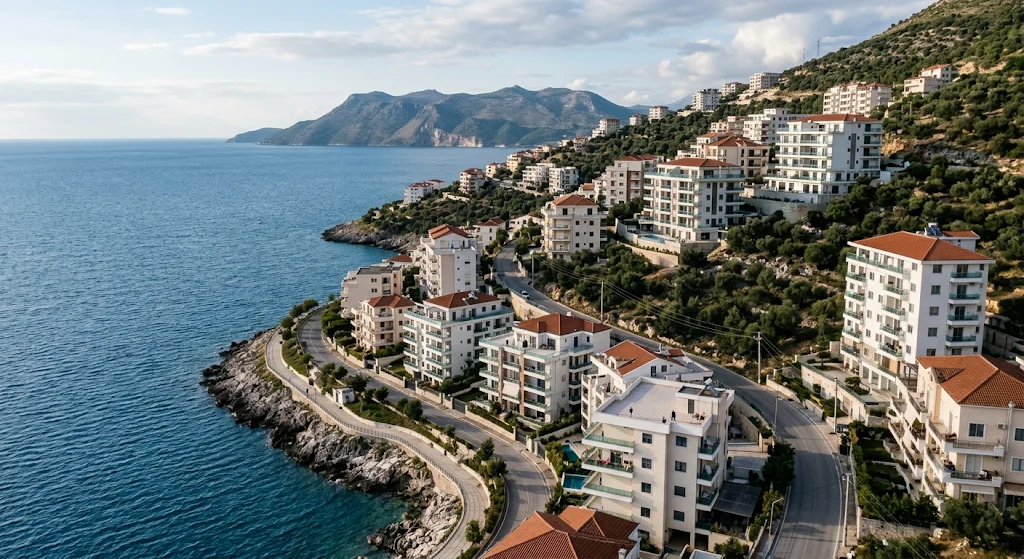
The Complete 2026 Guide to Buying Real Estate in Albania as a Foreigner
Tirana, October 24 (Albania Journal) – As Mediterranean real estate prices continue to reach record highs in traditional markets like Spain, Portugal, and Greece, international buyers and foreign investors are increasingly turning their attention to the Western Balkans.
Albania has emerged as one of the few remaining European countries offering direct freehold ownership, low property transaction costs, and a transparent legal framework for foreign nationals. Furthermore, acquiring residential property in Albania continues to serve as an independent legal ground to apply for a temporary residence permit without any minimum financial purchase threshold.
This complete guide outlines the statutory regulations, step-by-step conveyancing procedures, regional price metrics, and legal safeguards required for non-Albanian citizens purchasing real estate in 2026.
1. Legal Basis: What Can Foreigners Buy?
Under the Albanian Civil Code (Law No. 7850) and current real estate acquisition regulations, foreign natural persons and corporate entities enjoy equal ownership rights to Albanian citizens when acquiring residential and commercial structures.
| Property Category | Foreign Direct Ownership Allowed? |
|---|---|
| Residential Apartments & Condos | YES — Direct Freehold Title |
| Single-Family Villas & Houses | YES — Direct Freehold Title |
| Commercial Office & Retail Space | YES — Direct Freehold Title |
| Building/Construction Land | YES — Subject to tied investment |
| Agricultural Land & Forests | NO — Allowed via local Sh.p.k (LLC) |
- Freehold Buildings: Foreigners can directly buy apartments, villas, and commercial real estate in their own name without requiring an Albanian partner, local residency, or a special government permit.
- Land Ownership Rules: While the land directly beneath a building passes to the buyer upon title transfer, direct personal purchase of raw agricultural land, forests, and pastures by foreign individuals remains restricted. However, non-nationals can acquire agricultural land by establishing a local Albanian limited liability company (Sh.p.k).
2. Regional Price Analysis & Market Overview (2026 Metrics)
Real estate pricing across Albania varies substantially based on infrastructure access, proximity to the coast, and urban density.
Regional Price Benchmarks (Average € / m²)
| Market Region | Buyer Profile | Typical Price Range |
|---|---|---|
| Tirana (Capital) | Corporate expats, long-term investors | €1,200 – €2,500+ / m² |
| Sarandë | Foreign retirees, seasonal rentals | €900 – €1,500 / m² |
| Vlorë | Growth investors, coastal second homes | €800 – €1,400 / m² |
| Dhërmi / Himara | Luxury holiday home buyers | €1,200 – €2,500+ / m² |
| Durrës / Golem | Regional buyers, entry-level budget | €700 – €1,100 / m² |
3. Step-by-Step Purchasing Process
The conveyancing process in Albania is standardized under national notarization laws and generally takes 3 to 6 weeks from initial agreement to final cadastral registration.
The 6-Step Albanian Conveyancing Workflow
2. Obtain Tax ID →
3. Preliminary Contract →
4. Bank Transfer →
5. Final Contract →
6. Cadastre Title
Step 1: Legal Due Diligence & Cadastral Verification
Before transferring funds, an independent lawyer must review the property’s record in the State Cadastre Agency (ASHK – Agjencia Shtetërore e Kadastrës).
- Kartela Verification: The legal title document (Kartela) must be clean of mortgages, bank liens, encumbrances, or ongoing ownership disputes.
- Site Plan (Harta Treguese): Confirms that the physical boundary measurements match state survey registers.
Step 2: Obtaining an Albanian Tax Identification Number (NIPT)
Foreign buyers must acquire a local tax number from the General Directorate of Taxes prior to finalizing title transfers. This step can be executed in person or remotely via Power of Attorney.
Step 3: Preliminary Purchase Agreement & Deposit
A preliminary sales contract (Kontratë Porosie / Paraprake) is drafted by a notary. This document locks in the sale price, outlines payment schedules, and secures the property with a customary 10% earnest deposit held in a secure escrow or notary trust account.
Step 4: Final Sales Contract (Kontratë Shitblerje)
The official contract of sale is executed before an authorized Albanian Notary. Non-Albanian speakers are legally required to have an official certified court translator present during execution.
Step 5: Banking Clearance & Funds Transfer
Under strict Anti-Money Laundering (AML) standards enforced by the Bank of Albania, all payments must be routed through official banking channels. Cash payments for property purchases are legally restricted.
Step 6: Cadastral Registration & Ownership Certificate
Upon receipt of full payment, the notary submits the executed contract to the State Cadastre Agency. The state subsequently updates the land registry and issues a new digital Certificate of Ownership (Certifikatë Pronësie) in the foreign buyer’s name within 14–21 business days.
4. Closing Costs, Taxes, and Ongoing Fees
Buyer-side transaction costs in Albania remain among the lowest in Southern Europe, typically ranging between 2% and 4% of the total property value.
| Cost Item | Rate / Amount | Responsible Party |
|---|---|---|
| Property Transfer Tax | ~2% | Buyer / Market Standard |
| Legal & Conveyancing Fee | 0.5% – 1% | Buyer |
| Notary Tariff Scale | €150 – €450 | Buyer |
| Cadastral Registration Fee | €15 – €80 | Buyer |
| Annual Municipal Tax | 0.05% per year | Property Owner |
| Capital Gains Tax (on sale) | 15% on net gain | Seller |
| Net Rental Income Tax | 15% flat rate | Owner / Landlord |
5. Key Safeguards for Foreign Buyers
To mitigate investment risks, international investors should strictly adhere to three legal safeguards:
- Avoid Unregistered Developments: Ensure the unit possesses an existing cadastral certificate or that the developer holds a fully verified municipal building permit (Leje Ndërtimi) with registered bank guarantees.
- Utilize Bank Escrow Accounts: Never pay developers or individual sellers directly in cash or via non-bank intermediary accounts.
- Verify Restitution Claims: Confirm that the land history is clear of legacy property restitution claims by former owners through a formal cadastral history check.
