

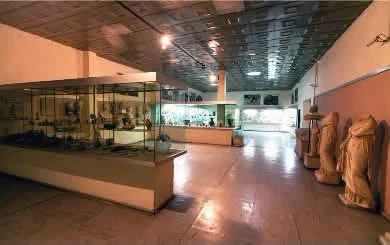
Tirana, November 01 (Albania Journal) – Albania’s National Archaeological Museum marked 78 years since its opening on November 1, 1948, becoming the country’s first museum institution established after the end of World War II.
The museum was founded at a time when Albania was working to rebuild not only its infrastructure but also its historical memory and cultural identity.
Initially established as the Archaeological-Ethnographic Museum, the institution brought together material evidence of Albanian civilisation and traditions under one roof.
Its opening on November 1, 1948, was the result of efforts by the first generation of Albanian archaeologists to establish national institutions dedicated to studying and preserving the country’s cultural heritage.
Archaeologists Hasan Ceka, Selim Islami, Skënder Anamali and Frano Prendi played important roles in the museum’s establishment and development, as well as in strengthening archaeological research in Albania.
The museum’s opening marked a significant milestone in archaeological studies and the preservation of Albania’s national heritage. In the years that followed, it became the country’s leading centre for collecting, studying and exhibiting archaeological artefacts discovered across its territory.
Its collections document the development of civilisations that inhabited the region from prehistoric times through the Middle Ages.
In 1976, the ethnographic section was separated, giving the institution a dedicated archaeological focus. It was subsequently organised as the National Archaeological Museum.
Since then, the museum has remained one of Albania’s most important cultural heritage institutions, closely connected to scientific research and the work of Albanian archaeologists.
The Autonomous Archaeological Museum under the Academy of Sciences of Albania continues to serve as a vital link to the country’s ancient past. It offers valuable insights into Illyrian, Greco-Roman, Byzantine and medieval civilisations while preserving and promoting Albania’s archaeological heritage for future generations.
